Historical & Cultural Context
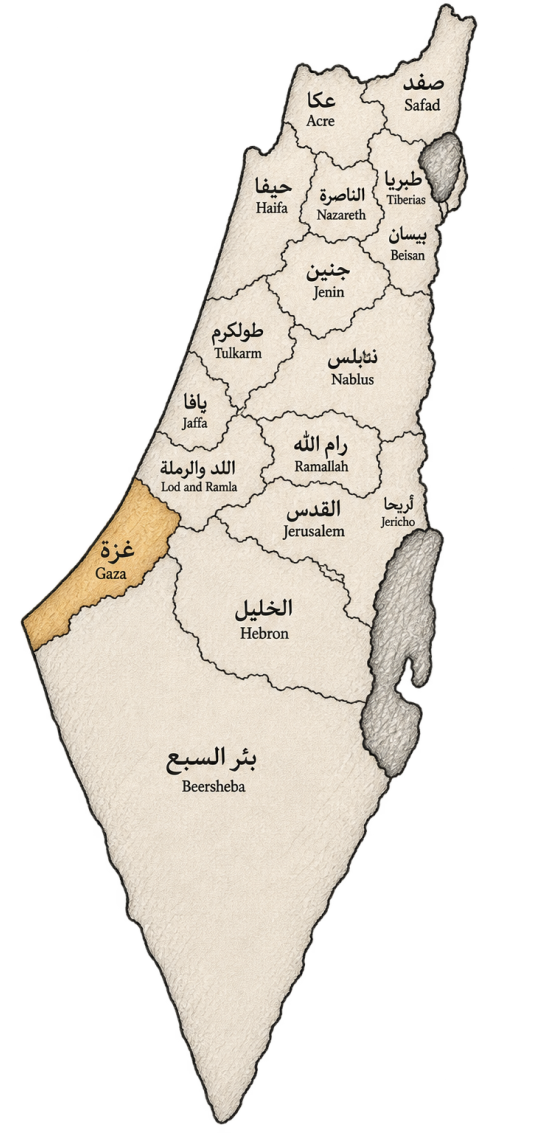
To understand Gaza Diary, it is important to understand the environment in which Mariam and her family live. Gaza is more than a location in the novel. It shapes the experiences, choices and struggles of its characters.
Gaza is part of the story itself.
The novel is set against the broader reality
of the Gaza Strip, a region associated with
decades of conflict and continuing struggles
around identity, land and human rights.
This context is not presented as distant
background. It directly influences the lives
of Mariam, her family and the people around
them.
Conflict
Decades of conflict form the wider environment surrounding the characters and influence their everyday reality.
Identity
Questions of identity and belonging form part of the broader context in which the story unfolds.
Land
The connection between people and land provides an important part of the historical and cultural backdrop.
Human Rights
The human consequences of conflict give the novel much of its emotional and social context.
From Headlines
to Human Lives
Conflict can often be reduced to headlines, statistics and political developments. Gaza Diary takes a different narrative approach by focusing on the people living through those circumstances.
Through Mariam’s diary, the larger historical reality becomes personal. Family separation, displacement, fear, childhood dreams and the need to survive are experienced through individual lives rather than distant statistics.
This is why the setting matters so deeply to the novel. The environment around Mariam does not simply surround the story. It changes what her characters can dream, remember and hope for.
The Context Behind the Story
Setting · History · Human ExperienceA Place Shaped by Conflict
Gaza’s long history of conflict forms the backdrop against which ordinary family life, childhood and personal dreams are presented.
The Human Experience
The novel moves from large historical realities toward individual experiences, allowing readers to encounter conflict through people and their relationships.
Fiction Inspired by Reality
Gaza Diary is a fictional narrative inspired by real incidents and realities in Palestine. It uses fiction to explore emotional and human experiences within that context.
Behind every historical event are individual lives, families and memories. Gaza Diary brings that human perspective to the centre of its story.
Understanding the world of Gaza DiaryThe Genesis
Every story begins somewhere. Gaza Diary grew from an engagement with real accounts and realities emerging from Palestine, eventually taking shape as a work of fiction.
From real accounts to a fictional narrative.
Gaza Diary was inspired by real incidents and real human experiences connected to Palestine. The intention was not to create a direct journalistic account, but to explore the emotional landscapes of people living through conflict.
Research into Palestine and the stories emerging from Gaza helped shape the environment, emotional realities and circumstances surrounding the characters.
Fiction gave the story room to follow Mariam and her family closely. Through their experiences, large political and humanitarian realities become personal and human.
The result is a narrative that combines the emotional freedom of fiction with a setting rooted in real-world realities.
From Reality to Narrative
The creative processListening
Real accounts and stories emerging from Palestine became the starting point for understanding the human experiences behind the wider conflict.
Research
Months of research and detailed study of Palestine-related news helped build the historical and emotional environment of the narrative.
Storytelling
Those realities were transformed into a fictional story centred on Mariam, her family, her diary and her struggle to hold on to hope.
A fictional narrative
Gaza Diary is a work of fiction. Its characters, diary entries and narrative structure are presented as part of the story created by the author.
Real incidents and realities
The narrative is inspired by real incidents and realities in Palestine. Research and real-world accounts informed the setting and emotional foundation of the story.
The Purpose
Gaza Diary was written with a clear purpose:
to make people aware of the suffering of Palestinian
civilians and the human cost of what is happening
in Gaza.
The story grew from real events, real suffering and
the need to make these realities harder to ignore.
To make people aware of the human cost of what is happening in Palestine.
Gaza Diary is a work of fiction inspired by real
incidents and realities in Palestine. The book was
written to draw attention to the suffering of
Palestinian civilians, especially children and
families caught in the violence.
Children have been killed. Families have been forced
from their homes. Many displaced people have been
forced to live in refugee camps and temporary shelters.
Food, clean water, medicine and basic necessities have
become critical needs.
Hospitals and healthcare facilities have faced
devastating conditions, while doctors, nurses,
paramedics and patients have continued to face danger.
Gaza Diary brings these realities into a fictional
human story so that readers can connect with the people
behind the headlines and statistics.
Children
Palestinian children have been among the victims of the war. Their deaths, injuries, fear and displacement represent one of the most painful realities behind the humanitarian crisis.
Displacement
Families have been forced from their homes and repeatedly displaced. Many have had to seek refuge in camps, schools and temporary shelters.
Food & Basic Needs
Food, water, fuel and other essential supplies have become critical humanitarian concerns for civilians living through the crisis.
Healthcare
Gaza’s healthcare system has faced severe disruption and destruction. Hospitals, patients and medical workers have continued to face extremely difficult conditions.
Hind Rajab
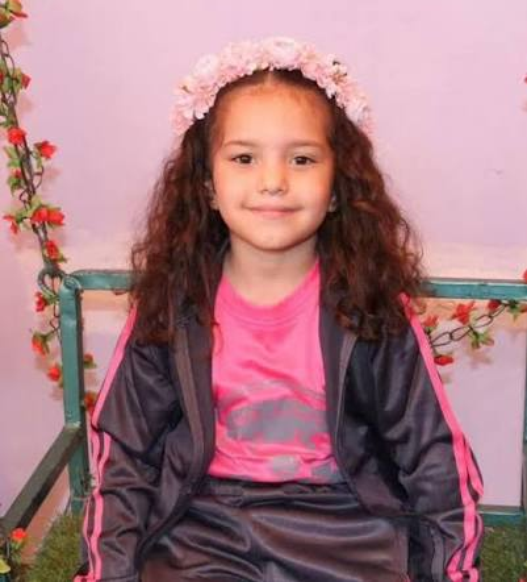
Hind Rajab was a five-year-old Palestinian girl from Gaza. On 29 January 2024, Hind and members of her family were trying to evacuate Gaza City when their car came under Israeli fire.
Hind survived the initial attack but became trapped inside the vehicle among the bodies of her family members. Her 15-year-old cousin Layan also remained alive for a short time and spoke with Palestine Red Crescent Society rescuers.
Hind then spoke to the Palestine Red Crescent Society and pleaded for help. She remained trapped inside the car for hours while rescuers tried to reach her.
Hind Rajab was killed by Israeli forces.
In August 2026, the Israeli military acknowledged that its troops had fired on the car carrying Hind and her family and announced a criminal investigation into the incident.
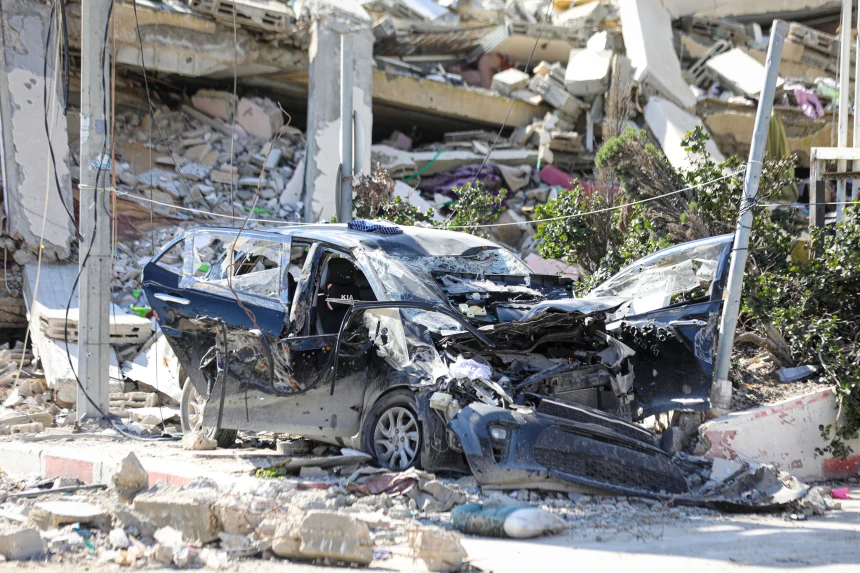
Bullet impacts on the family car
Investigations documented hundreds of bullet impacts on the family vehicle. Reports have cited figures ranging from 335 to 355 impacts.
Al Jazeera’s investigation reported that the car had 335 bullet holes. A subsequent forensic reconstruction using satellite imagery and audio identified several Israeli Merkava tanks in the vicinity and found no evidence of an exchange of fire with Palestinian fighters.
Al Jazeera · New evidence in Hind Rajab family killingAfter Hind’s desperate calls for help, a Palestine Red Crescent ambulance was dispatched to rescue her. The two paramedics, Yousef Zeino and Ahmed al-Madhoun, were killed while attempting to reach her.
Hind, her family members and the two paramedics were found dead twelve days later.
Al Jazeera’s investigation reconstructed the incident and reported that an Israeli tank fired at the family car from a distance of approximately 13 to 23 metres. The investigation also reported that a tank shell directly hit the ambulance sent to rescue Hind.
Al Jazeera · Israeli tank fired at Hind Rajab family car29 January 2024
Hind and her family attempted to evacuate Gaza City.
Under Fire
Israeli forces opened fire on the family vehicle. Hind remained alive inside.
Rescue Attempt
Palestine Red Crescent dispatched an ambulance to rescue Hind.
Twelve Days Later
Hind, her family and the two paramedics were found dead.
Why Gaza Diary Was Written
Gaza Diary seeks to bring attention to the suffering of Palestinian civilians through fiction. The story focuses on children, families, displacement, fear, loss and hope while asking readers to look beyond headlines and statistics. Its purpose is to create awareness about the human reality of Palestine and to encourage readers to remember the people behind the numbers.
Beyond The Pages
Palestine: History, Occupation & Memory
To understand Gaza Diary, it is important to understand the history of Palestine, the Nakba, Israeli occupation, displacement, violence in Gaza, and the culture and memory Palestinians continue to carry.
HUMAN COST
OF THE WAR
Gaza has endured a profound humanitarian crisis since 7 October 2023. These figures present reported losses, injuries and damage documented by humanitarian, health, education and media organizations.
Latest available figures vary by source and reporting date.
Palestinians reported killed in Gaza since 7 October 2023.
Palestinians reported injured in Gaza since 7 October 2023.
Traumatic limb amputations reported by WHO amid the rehabilitation crisis in Gaza.
21,700+
Palestinian children reported killed between 7 October 2023 and 30 June 2026.
43,011
People estimated by WHO to have potentially life-changing injuries.
931
WHO-documented attacks affecting healthcare in Gaza from October 2023 through 31 December 2025.
209
Journalists and media workers documented by CPJ as killed by Israel in Gaza or in Israeli detention since 7 October 2023.
97.5%
Of schools in Gaza are estimated to have been damaged or destroyed.
36
Gaza’s 36 hospitals were unable to operate at full capacity in the cited health-functionality assessment.
42+
Human rights defenders documented as killed in Gaza during 2025.
Figures come from different reporting dates and methodologies. Casualty totals are reported figures from Gaza health authorities. WHO, UNICEF, UNESCO and CPJ use their own verification and reporting methods. The figures should therefore be read with their stated source dates rather than as a single independently verified dataset.