A Story.
An Archive.
A Commitment
to Remember.
Gaza Diary is an author-led literary, educational and documentation initiative dedicated to Palestinian history, culture, human rights, historical memory and the people behind the headlines.
Created by Indian author Shahab Khan, the platform brings together the emotional power of storytelling and the importance of accessible, source-based historical understanding.
More Than
the Pages
of a Book.
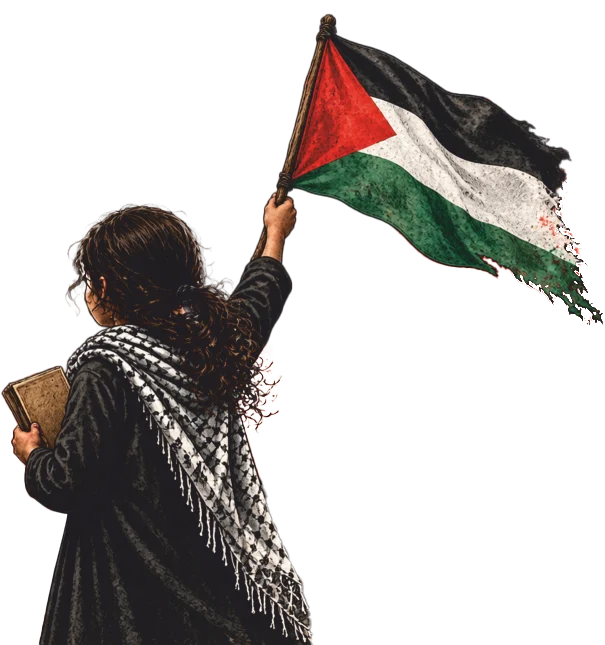
Gaza Diary began with a novel inspired by real incidents and human experiences in Palestine. It has since grown into a wider initiative connecting literature, public awareness, historical documentation and educational resources.
The website serves two connected purposes. The first is to tell a deeply human story through the fictional diary of a young Palestinian girl. The second is to help readers discover and understand the history, culture, people, politics, legal questions and humanitarian realities of Palestine.
Palestine cannot be understood through a single headline, one political event or one generation. Its history extends across centuries, and its identity is preserved in its cities, villages, literature, cultural traditions, collective memory and the lives of its people.
From Human Suffering to a Story That Could Speak.
Gaza Diary began as a response to the accounts of suffering emerging from Gaza and Palestine.
Shahab Khan spent months reading reports, following developments and researching the experiences of ordinary families living through violence, displacement and loss.
Among the events that deeply affected him was the killing of five-year-old Palestinian girl Hind Rajab, who was trapped inside a car in Gaza on 29 January 2024, surrounded by relatives who had been killed while she desperately sought help.
Her story, along with the experiences of many other Palestinian children and families, became part of the emotional inspiration behind the novel.
Rather than presenting a journalistic investigation or claiming to reproduce a real child’s exact personal experience, the author chose fiction to explore childhood, family, separation, survival, grief and hope.
Visit the Hind Rajab MemorialIn the rubble of Gaza, hope writes its own diary.Gaza Diary · Shahab Khan
The decision to write through the fictional voice of a child allowed the narrative to explore the human experiences behind conflict with the intimacy of a personal diary.
That novel became the starting point for a wider initiative to help readers understand Palestine beyond the fictional narrative.

Gaza Diary:
The Novel.
At the heart of Gaza Diary is Mariam, a twelve-year-old Palestinian girl living in Gaza who dreams of becoming a doctor.
Her diary begins with the ordinary moments of childhood, her dreams, memories and the love of her family. As violence and displacement transform her world, writing becomes her way of preserving the memories she fears losing.
Through Mariam, her father Yusuf, her mother Fatima, her younger brother Ahmed and others whose lives intersect with hers, the novel explores the human experience of war, displacement, resilience, dignity and hope.
Gaza Diary is a work of fiction inspired by real incidents and realities in Palestine. Its fictional characters and diary entries are not presented as authenticated eyewitness testimony.
One Story. Multiple Languages. Different Ways to Read.
Gaza Diary is available in English, Hindi and Urdu, with print and digital reading options, including free eBooks offered through the official website.
English Edition
Discover Mariam’s story in English through paperback, hardcover, eBook or free digital reading.
View English Editions ↗Hindi Edition
Experience Gaza Diary in Hindi. The official website lists paperback, eBook and free digital reading options.
View Hindi Editions ↗Urdu Edition
Explore Mariam’s journey in Urdu through the free digital reading option linked on the official Gaza Diary website.
Read the Urdu Edition ↗Visit the official Gaza Diary homepage for the latest purchasing links and available free-reading editions.
Palestine Archive:
History, People,
Politics & Memory.
A developing digital archive dedicated to documenting the history of Palestine, its people, political leadership, institutions, culture, historical records and the events that have shaped Palestinian society.
The Gaza Diary Palestine Archive is being developed as a comprehensive, source-based reference collection for Palestine and Palestine-related historical, political, cultural and humanitarian information.
Its intended coverage reaches from the earliest documented periods of Palestine’s history through successive civilizations, empires, the Ottoman era, British administration, the Nakba, displacement, occupation and developments in the modern period.
Alongside historical events, the archive will examine the people who shaped Palestinian history, including political leaders, government figures, ministers, diplomats, representatives, intellectuals, community leaders, national movements, organizations and other documented individuals.
This initiative aims to bring together historical chronology, verified biographies, photographs, maps, primary documents, official records, research publications, cultural heritage and references to the institutions responsible for preserving original material.
Documenting Palestine Across History, Generations and Institutions.
The comprehensive archive’s research programme is being developed around interconnected historical subjects and biographical records. Existing educational pages provide further reading on several of these topics.
Complete Historical Chronology
From ancient Palestine and successive periods of rule to Ottoman administration, British Mandate Palestine, the 1947 partition proposal, the 1948 Nakba, the 1967 war, displacement, occupation and modern developments.
Explore History ↗Political Leaders & Governments
Research into Palestinian political leaders, presidents, prime ministers, ministers, legislators, diplomats, government institutions, political parties and individuals connected to Palestine’s political history.
The developing archive aims to document their biographies, roles, periods in office, political activities and reliable historical sources.
National Movements & Organizations
Historical research on Palestinian national movements, political organizations, factions, representative bodies, civil institutions, their founding histories, leadership structures, ideologies, major events and documented activities.
Relevant political and historical distinctions will be preserved rather than treating all organizations as interchangeable.
Biographies & Important Figures
Profiles of historical personalities, activists, scholars, writers, journalists, cultural figures, humanitarian workers, community leaders and international individuals connected to Palestinian history.
The objective is to provide traceable biographical information, dates, contributions and references wherever available.
Geography, Maps & Displacement
Historical geography, Palestinian cities and villages, maps across different periods, depopulated communities, land records, refugee history, boundaries and major geographical changes.
Explore Historical Context ↗Palestinian Culture & Heritage
Cultural traditions, Palestinian Tatreez embroidery, Dabke, literature, poetry, cuisine, architecture, religious heritage, olive harvests, folklore, artistic expression and cultural life across Palestine and the diaspora.
Explore Culture ↗Human Rights & International Law
The laws of occupation, civilian protection, international humanitarian law, settlements, detention, refugee rights, United Nations resolutions and proceedings involving the ICJ and ICC.
Legal allegations, judicial orders, warrants and final rulings must be distinguished.
Explore Legal Records ↗Humanitarian Conditions & Data
Published information about casualties, injuries, displacement, access to food, water, healthcare, education, humanitarian conditions and damage to civilian infrastructure.
Figures require source attribution, clear dates and methodological context.
Explore Data ↗Documents, Photographs & Research
A growing programme for organizing documentary references, historical photographs, institutional records, official publications, academic research, timelines and material connected to Palestine.
Original custodians and provenance should be identified where known.
Explore References ↗
To Preserve Memory.
To Encourage Understanding.
To Keep Humanity Visible.
Gaza Diary seeks to make Palestinian history, cultural identity, political and humanitarian information and documented human experiences more accessible to readers.
Its mission is to connect storytelling with knowledge, encourage critical engagement with sources, preserve awareness of historical experiences and recognize the lives and dignity of the people behind historical events.
Compassion and careful documentation belong together. An emotional response may inspire someone to begin learning, but lasting understanding requires evidence, context, responsible interpretation and respect for human dignity.
Our Approach to Sources, Evidence & Documentation.
Gaza Diary is an author-led initiative with a humanitarian focus on Palestinian lives, rights, history and dignity. This focus also requires a clear distinction between documented facts, interpretations, claims, allegations and unresolved questions.
Source Transparency
Important factual claims should, wherever possible, be supported by identifiable primary documents, official publications, academic research or established reporting sources.
Historical Context
Events should be understood within their relevant historical, social, legal and political circumstances, rather than presented as isolated incidents.
Biographical Accuracy
Profiles of political leaders and historical personalities should distinguish verified dates and roles from disputed claims, conflicting accounts and interpretations.
Responsible Legal Reporting
Legal applications, allegations, provisional measures, advisory opinions, arrest warrants and final judgments are distinct legal developments.
Data & Reporting Dates
Humanitarian statistics should be read with their source, reporting date, geographical scope and methodology. Figures may change as updated reports become available.
Fiction & Fact
The fictional narrative of Gaza Diary remains distinct from historical documents, real-world testimonies and archival research materials.
Who Is Gaza Diary For?
Gaza Diary welcomes visitors from different countries, cultures and levels of familiarity with Palestine. You do not need to be an expert to begin learning.
Readers
Explore Mariam’s fictional journey and discover the realities that inspired its setting and themes.
Students & Educators
Find historical introductions, timelines, cultural information, explanations and pathways to further reading.
Researchers & Writers
Discover subjects, biographies, institutional records, historical questions and original-source references for further investigation.
Curious Minds
Begin with accessible explanations, explore different perspectives and continue learning through documented sources.
A Living Resource for Learning and Remembrance.
History does not end with a single book, article or historical account.
New documents may emerge, academic research may provide deeper understanding, political developments may change and legal proceedings may advance.
Gaza Diary’s Palestine Archive is conceived as an evolving reference collection that can be expanded, reviewed and corrected as reliable information becomes available.
Readers are encouraged to consult original sources, examine publication dates, consider historical context and approach contested questions with care.
The intention is not merely to collect information, but to make it meaningful, understandable and useful for current and future readers.
Memory is not only about the past. It is also about what future generations are able to know, understand and remember.
Understanding Gaza Diary.
Answers to common questions about the novel, the Palestine Archive, its creator and the research initiative.
What is Gaza Diary?
Gaza Diary is a novel written by Indian author Shahab Khan and an accompanying literary, educational and documentation website. The platform includes Palestine-related history, culture, human rights information and a developing Palestine Archive.
Who created Gaza Diary?
Gaza Diary was created by Shahab Khan, an Indian author, poet, storyteller and graphic designer based in Bhopal, India. His Gaza Diary novel was published in 2025.
Is the Gaza Diary novel based on a true story?
The novel is a work of fiction inspired by real incidents and human experiences in Palestine. Mariam and the fictional characters are literary creations, not authenticated eyewitnesses.
What is the Gaza Diary Palestine Archive?
The Palestine Archive is a developing source-based digital reference initiative dedicated to Palestinian history, political leadership, biographies, movements, organizations, geography, historical documents, culture, human rights and related records.
Does the archive include information about Palestinian political leaders?
Yes. Research into Palestinian political figures, presidents, prime ministers, government officials, political organizations, diplomats and historical leaders is part of the archive’s planned comprehensive scope. This research is still being developed.
Does the Palestine Archive cover the complete history of Palestine?
The archive is being developed with the aim of documenting Palestine’s long history across ancient, medieval, Ottoman, British Mandate and modern periods, including the Nakba, displacement, occupation and major political developments. The comprehensive collection is not yet complete.
Is the Palestine Archive available now?
The dedicated comprehensive Palestine Archive is currently under development. GazaDiary.com already provides various educational pages, historical explanations, cultural resources, legal information and research references.
Where does Gaza Diary obtain its historical information?
The website draws on published institutional information, academic research, historical records, humanitarian publications, human rights documentation, court materials and other identifiable references. Visitors should consult the original sources cited on individual pages.
Is Gaza Diary an official government or humanitarian archive?
No. Gaza Diary is an independent, author-led literary and educational initiative. It is not an official government archive, United Nations body, court, news agency or humanitarian relief organization.
Is Gaza Diary available in paperback, hardcover and eBook editions?
The official website lists English paperback, hardcover and eBook editions, alongside English free digital reading. Hindi paperback, eBook and free eBook options are also listed, together with free Urdu digital reading.
Can students and researchers use Gaza Diary?
Yes. The website’s historical explanations, reference materials, timelines, cultural information and research pathways may help students, teachers, writers and researchers. Academic use should include independent verification from original sources.
How can readers contribute to Gaza Diary?
Readers can share the educational resources, suggest credible historical references, report factual corrections, contact the author and inquire about voluntary translation contributions to the novel.
Read the Story.
Discover the History.
Remember the People.
Whether you arrived through Mariam’s diary, a historical question, a political biography, a cultural tradition or a wish to understand Palestine more deeply, we invite you to explore with care, curiosity and compassion.
Read the novel. Explore the history. Discover the documents. Learn from Palestinian voices. Follow the sources.
A story that began with a child’s voice and continues through a commitment to memory, knowledge and humanity.