
Behind Gaza’s Broken Walls: The Helpless Smiles of Children
 by Shahab Khan Author Gaza Diary · 5 min read · September 22, 2026
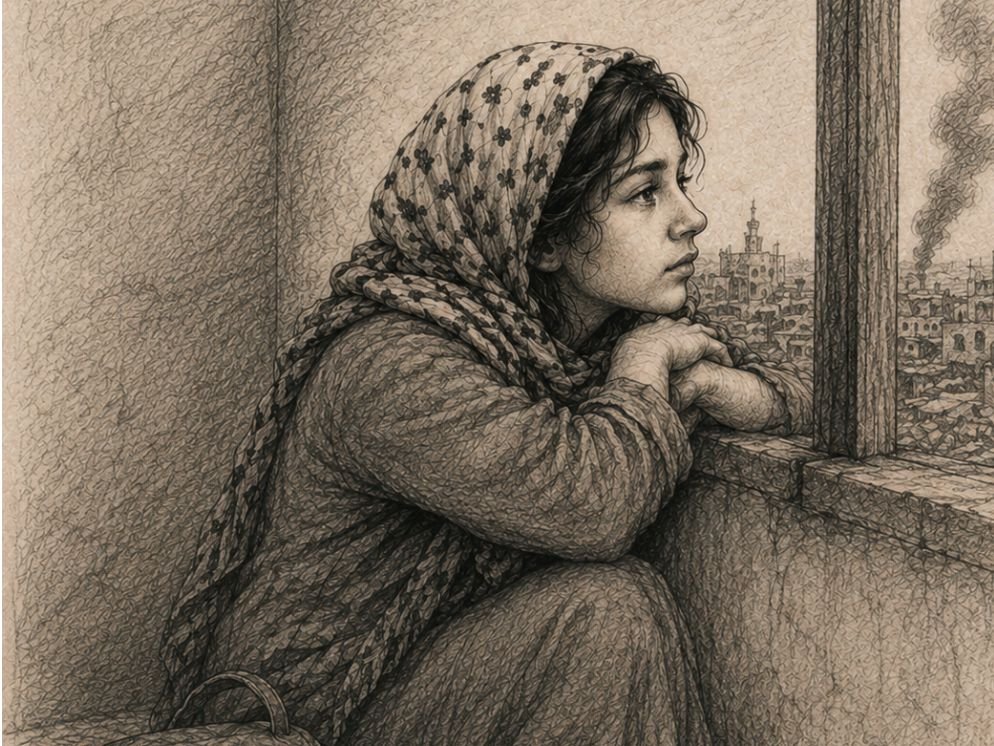
Just imagine for a moment. A place
where every child's morning starts with the question: will I be alive by
evening or not? Where playing means playing with stones, and laughing means
forgetting what happened yesterday. This is not a story. This is Gaza. And the
children here are those innocents whose smiles are still alive, but helpless.
Those children who get tired before they grow up
In Gaza, you can't measure a child's
age by the date. There, no one is five years old, no one is ten years old.
There, children live through one war, then another, then another. At five, they
know the difference between the sound of a drone and the sound of a bomb. At
ten, they remember when their house was blown up last time. And at fifteen,
their eyes have a tiredness that even an old person shouldn't have.
These children are not growing up.
They are just surviving. And those who survive carry a burden on their
shoulders that no human being should have to carry.
The world behind the broken walls
The pictures of Gaza we see are just
rubble. But behind that rubble, there is a whole world. There, children search
for their dolls among pieces of concrete. There, girls gather their notebooks
so they can go to school tomorrow, if the school is still standing. There,
children sit inside tents and remember the names of their friends who are no
longer there.
These children are not different from
us. They like chocolate too. They like watching cartoons too. They want cake on
their birthdays too. The only difference is that their chocolate is covered in
dust, their cartoons are on a broken TV, and on their birthdays there is no
cake, just a prayer that they get another birthday.
And now the thing that hurts the
most. The children of Gaza smile. Yes, they smile. In their smile, there is a
helplessness that makes your eyes well up. When a child waves at the camera,
when a girl shows her broken doll, when a boy stands on the rubble and makes a
peace sign, that smile becomes a question on our conscience.
This smile is not weakness. This is
courage. This is an answer to a world that has forgotten them. It says: you can
break our homes, you can break our dreams, but you cannot break our spirit.
In Gaza, not every mother's lap is
empty, but every mother's lap is certainly scared. She sleeps holding her child
to her chest, so that if something happens at night, she can feel it. She says
her child's name like she is reciting a prayer. She runs her hand through his
hair and wonders whose hair these hands will touch tomorrow.
And the mothers who have lost their
children, no one can write their story. The emptiness in their eyes does not
fit into any newspaper headline. It is just a scream that echoes forever, but
there is no one to hear it.
The games of Gaza's children have
changed now. Earlier they played cricket in the alley, now they climb piles of
rubble. Earlier they flew kites, now they just look at the sky and wonder if a
helicopter is coming. Earlier they played hide and seek, now they hide in real
life.
This is not childhood. This is the
funeral of childhood. And the children who pass through this funeral are never
whole again. They do grow up, but somewhere inside, they remain broken.
What is our responsibility?
Now the question is: what can we,
sitting thousands of miles away from this war, do? We cannot rebuild their
homes. We cannot bring their parents back. We cannot heal their wounds. But
there is one thing we can do: we cannot forget them.
We can listen to their stories. We
can look at their pictures. We can remember their names. We can raise our voice
for them. We can carry their smiles to a world that does not want to see them.
This is little, but it is better than
nothing. And as long as we remember them, they are not alone.
“These children are not growing up. They are just surviving. And those who survive carry a burden on their shoulders that no human being should have to carry.
 Humanity · StoryWhy I Wrote Gaza Diary: A Story of a Pen, a Voice of Conscience – Shahab Khan↗
One last thing
Behind the broken walls of Gaza, the
children who are there are a mirror to our humanity. Their helpless smiles tell
us that there is still something left in this world that is not broken. And as
long as that smile remains, there is hope.
Maybe we cannot do anything big for
them. But we can do this: we can see them. Really see them. Without looking
away. Without trying to forget. Because the day we stop seeing them, that day
we lose our own humanity.
And don't say, "What can we
do?" Every time you tell someone their story, every time you pray for
them, every time you stop and look at their picture, you are doing something.
And that something, for the smiles of those children, is a lot.
 Shahab Khan Author Gaza DiaryPalestine Archive & Editorial Journal
Why I Wrote Gaza Diary: A Story of a Pen, a Voice of Conscience – Shahab Khan
Some books are not written, they write themselves. Gaza Diary is that book for me. This is the story behind the story, a tale of pain, responsibility, and the innocent lives of Palestine.